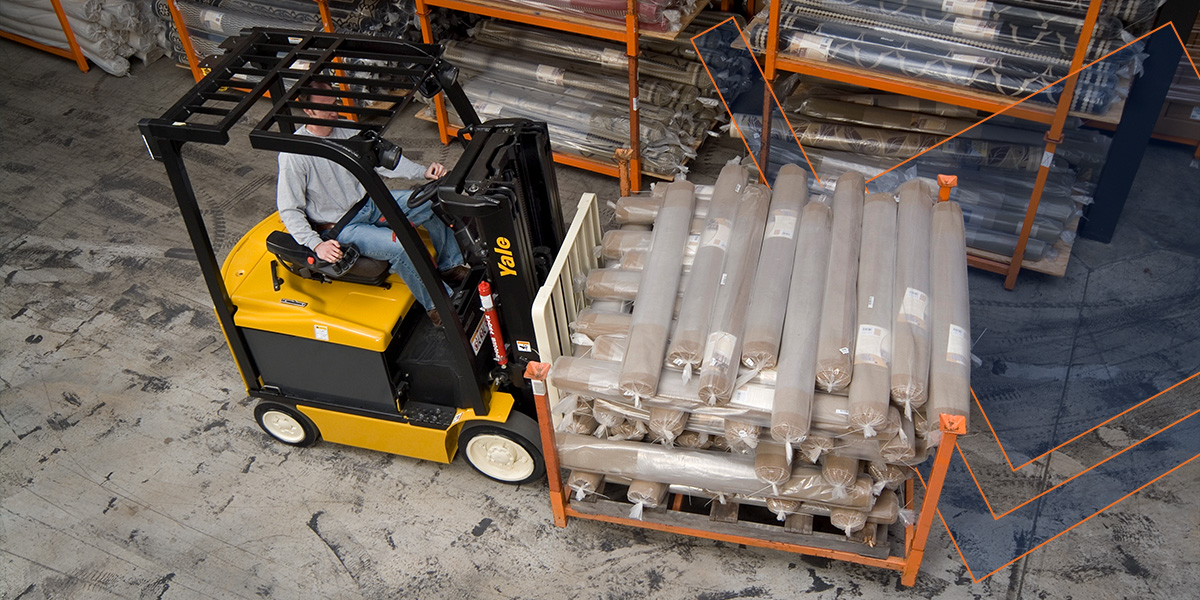
When comparing electric forklifts vs. fuel-powered ones, most operations focus on the sticker price. Yet, according to the New Jersey Fleet Electrification Supplement, electrified medium- and heavy-duty vehicles, including forklifts, have a lower total cost of ownership over their lifespan than diesel models, driven primarily by lower maintenance and fuel costs.
Finding the ideal forklift for your operation requires you to understand the complete financial picture, match equipment capabilities to your environment and recognize how your choices impact everything from your bottom line to your team’s daily experience.
Total Cost of Ownership Between Electric and Fuel-Powered Forklifts
When evaluating the cost comparison between electric vs. LP or diesel lift trucks, the initial purchase price tells only part of the story. A comprehensive look at the total cost of ownership reveals where your investment goes over the equipment’s lifespan.
Up-Front Purchase Price
Fuel-powered forklifts, whether propane, diesel or other internal combustion models, typically carry a lower initial purchase price. Electric forklifts require a higher up-front investment that includes the forklift, plus the battery and charging infrastructure your facility needs to keep it running. This price difference can be significant, and it’s often the first hurdle business owners and operations managers encounter when building a business case for electric equipment.
Fuel and Energy Consumption
Electric and fuel-powered forklifts differ most dramatically in energy costs. For instance, when comparing a diesel forklift vs. an electric forklift on efficiency alone, the numbers are striking.
Research published in IEEE found that an electric forklift operates at 0.77 efficiency in motion and 0.87 in hydraulic operation. According to the same study, a diesel forklift runs at only 0.25 efficiency in motion and 0.28 in hydraulic operation. That means electric forklifts convert roughly three times more of their input energy into useful work, while diesel engines lose significant energy as heat and through mechanical inefficiencies.
Diesel’s inefficiency stems partly from continuous fuel consumption. The engine burns fuel whenever it runs, even during significant periods of inactivity at rated power and minimum load. By contrast, electric motors only draw power when actively working.
Fuel costs also behave differently. Electricity rates remain relatively stable and predictable, making it easier to forecast your operating budget. Fossil fuel prices for propane and diesel fluctuate with market conditions, introducing volatility into your long-term cost projections.
Maintenance and Repairs
Electric forklifts have far fewer moving parts than their internal combustion counterparts, and that simplicity often translates directly into lower maintenance costs and reduced downtime.
The maintenance checklist for electric forklifts includes the following.
- Battery maintenance: Watering for lead-acid batteries, terminal cleaning and periodic inspections
- Electrical system checks: Annual inspections to ensure safe operation
- Brake system maintenance: Regular checks and adjustments as needed
Fuel-powered forklifts require considerably more attention.
- Engine oil changes: Regular intervals to maintain engine health
- Fuel filter replacement: Ongoing maintenance to prevent contamination
- Air filter cleaning: Essential for proper combustion, especially in diesel and internal combustion engines
- Cooling system service: Regular maintenance to prevent overheating
- Transmission service: Periodic fluid changes and inspections
Calculating Your Long-Term ROI
When you factor in lower fuel costs, reduced maintenance expenses and fewer unplanned repairs, electric forklifts often deliver a higher return on investment, despite their higher initial purchase price. A comprehensive cost analysis compared battery electric forklifts to internal combustion models across multiple operational scenarios. The study found that electric forklifts demonstrated superior cost-effectiveness over their operational lifespan, with the total cost of ownership favoring electric models even when accounting for higher up front battery and infrastructure investments.
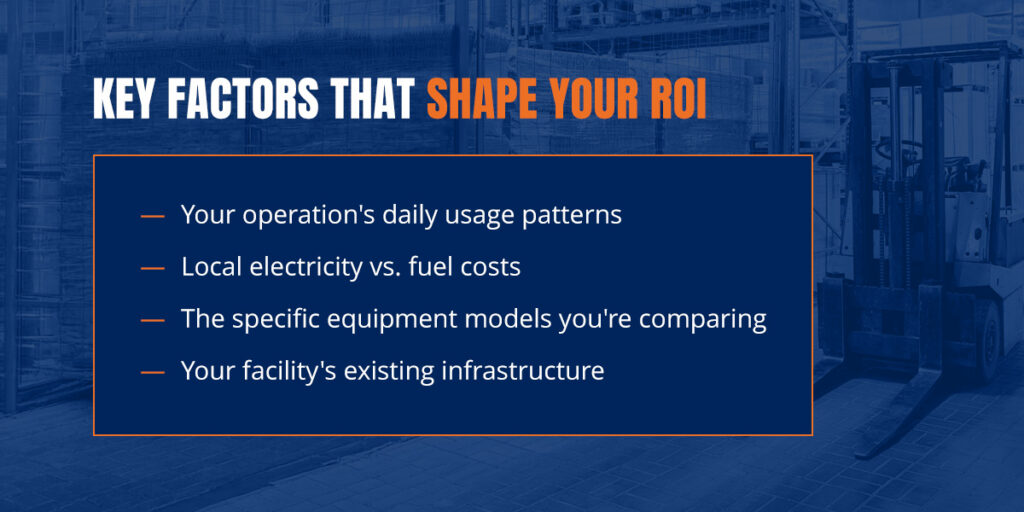
Your actual ROI depends on several factors:
- Your operation’s daily usage patterns
- Local electricity vs. fuel costs
- The specific equipment models you’re comparing
- Your facility’s existing infrastructure
This forklift cost comparison tool offers a useful starting point for rough estimates in your specific situation. It can help you understand the total cost of ownership across electric, propane, diesel and gasoline forklifts.
Performance in Your Environment — Matching Power to Productivity
Deciding between fuel-powered and electric forklift models isn’t purely an economic choice. How and where you use your equipment matters just as much as what it costs to run.
Indoor vs. Outdoor Forklift Options
Your operating environment largely determines which fuel type makes more sense. Electric forklifts produce zero emissions, a critical advantage for maintaining air quality and meeting safety regulations in enclosed, indoor spaces. Modern four-wheel electric forklifts also handle outdoor work effectively, expanding their versatility beyond traditional warehouse floors.
Fuel-powered options, including pneumatic tire forklifts, cushion tire models and rough terrain equipment, remain strong choices for outdoor-only applications. California’s CARB regulation, which took effect in 2025, is now phasing out internal combustion forklifts even for many outdoor applications. This shift signals that electric technology is increasingly capable of handling the full range of material handling tasks.
Refueling vs. Recharging
Fuel-powered options offer quick turnaround times. You can swap out a propane tank in a few minutes, giving you a nearly instant return to operation. Diesel refueling takes roughly the same time as fueling any vehicle, usually completed in under five minutes at an on-site fuel station or with mobile refueling service.
Older lead-acid battery systems require more planning. A full charge may take up to eight hours or more, depending on the capacity and charging infrastructure, which is why many operations maintain multiple battery sets and use battery-swapping systems. In contrast, advanced lead-acid batteries and lithium-ion battery systems support opportunity charging, allowing your operators to top off the charge during breaks, shift changes or any downtime without removing the battery from the forklift. This flexibility minimizes battery swaps and the need to maintain multiple battery sets.
The Human and Environmental Impact
Beyond costs and performance specs, your forklift choice affects your team’s daily working conditions and your operation’s environmental footprint.
Emissions and Air Quality
Electric forklifts don’t produce exhaust gases during operation, which dramatically improves air quality in your facility. No combustion means you won’t release carbon monoxide, nitrogen oxides or particulate matter into your working environment. For instance, a single 48V electric forklift with a 700AH battery capacity saves approximately seven metric tons of CO2 per year compared to a similar diesel-powered forklift. Zero-emissions systems are beneficial, especially in warehouse environments with limited ventilation where operators spend extended periods in enclosed spaces.
Noise Safety and Operator Well-Being
Electric forklifts run significantly quieter than internal combustion models, reducing noise pollution throughout your facility. Decreased noise improves communication between operators and ground personnel, decreases operator fatigue during long shifts and creates a more comfortable working environment. Beyond noise reduction, electric forklifts eliminate the need to store and handle flammable fuels on-site. As a result, your team will deal with fewer safety protocols for combustible materials.
Find Your Ideal Forklift Solution at Barclay
The right forklift depends on your specific application, environment and budget. Whether electric makes sense for your operation or fuel-powered equipment fits better, Barclay offers the full range of solutions to meet your needs.
We provide a consultative approach to material handling equipment, helping you find the perfect fit from our extensive inventory. Browse our selection of new electric and fuel-powered forklifts, explore quality preowned options or find flexible rental solutions to keep your operation moving. Please get in touch with our team if you have any questions or would like to discuss your specific needs.