
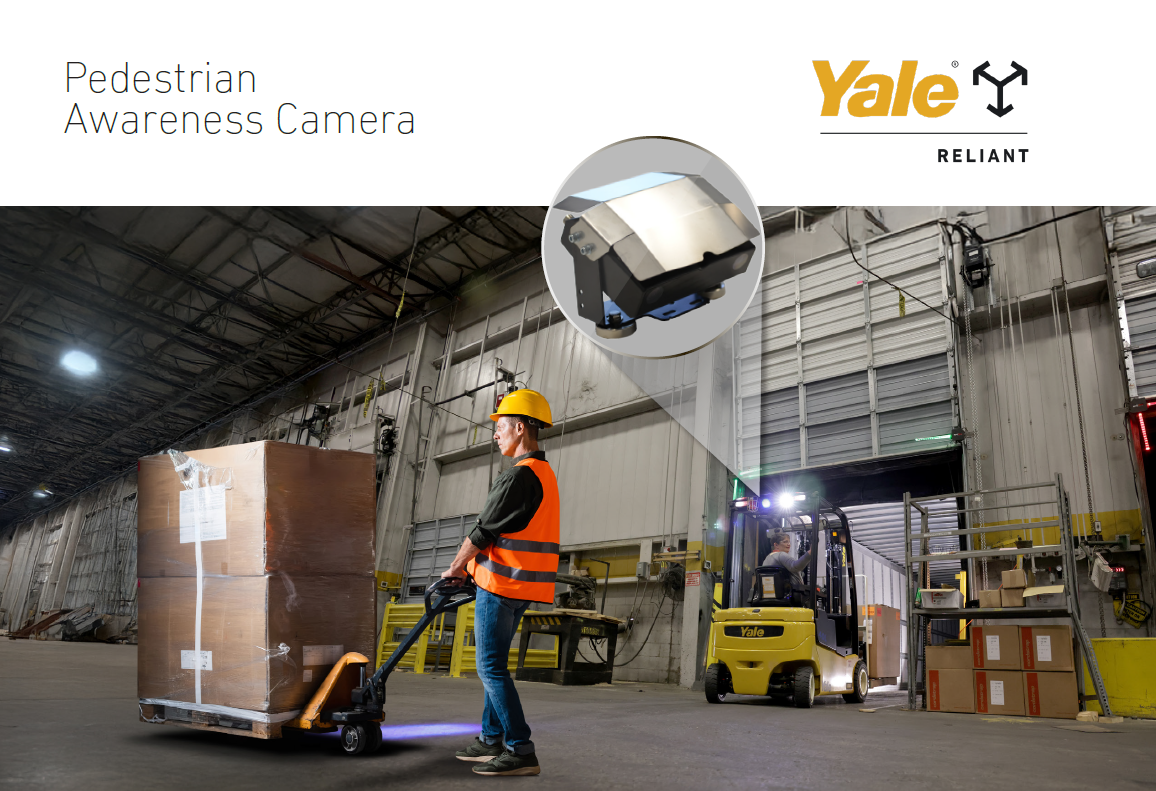
In busy warehouse and distribution environments, forklift-pedestrian interactions remain one of the most persistent safety challenges. Even well-trained operators can experience reduced situational awareness in high-traffic areas, tight aisles, or fast-paced operations. That’s why innovations like the Yale® Pedestrian Awareness Camera matter. They help supplement human vigilance with smart, real-time alerts that support safer decision-making on the job.
Why Warehouse Pedestrian Awareness Matters
Warehouse incidents involving forklifts and pedestrians can cause serious injury, lost time, liability exposure, and costly operational disruptions. Research shows tens of thousands of people are injured annually due to forklift-related accidents, and a significant portion involves pedestrians who were unseen in the operator’s path. Integrating forklift safety cameras can reduce these risks by giving operators early, actionable warnings to avoid unsafe situations.
How Forklift Pedestrian Safety Cameras Work
The Yale Pedestrian Awareness Camera is designed to assist operators by alerting them when a person enters the designated detection area around a lift truck. Key technical and functional highlights include:
- Wide Detection Range: The camera provides a 110-degree field of view and reliably identifies pedestrians up to 16–20 feet away, depending on operating conditions.
- Mounted Rear Position: Positioned on the rear, forks-trailing side of the truck, where blind spots often occur.
- Three Types of Alerts:
- Audible Alerts: A voice alert — “Pedestrian within 16 feet” — helps ensure operators hear when someone is detected.
- Visual Alerts: Cabin display indications show the detection zone, so operators see where attention is needed.
- Traction Alerts: Optional deceleration feedback gently slows the truck, similar to lifting off the accelerator and drawing operator attention without removing control.
This combination of alerts enhances operator awareness by leveraging sight, sound, and physical cues simultaneously.
Supporting Operator Awareness — Not Replacing It
It’s important to emphasize that this technology is an assist tool, not a substitute for proper training or responsible operation. Operators must still perform pre-use inspections, maintain line-of-sight when possible, and follow established operating procedures. The camera system enhances awareness, but the ultimate responsibility for safe operation rests with the operator.
Configurable for Your Operation
One of the standout features of the Yale Pedestrian Awareness Camera is its flexibility:
- Modular Alert Configuration: Facilities can choose just audible and visual alerts, or add traction feedback depending on their safety priorities and traffic patterns.
- Multi-Camera Safety Solutions: Beyond the standard rear view, additional cameras can be added in field-installed configurations to expand coverage around the truck.
- Existing Fleet Adaptability: The system is compatible with a wide range of lift trucks, including models already in service — making it a viable upgrade for many operations.
These choices help sites tailor the system to their unique layout, operational complexity, and workforce experience levels.
Best Practices for Integrating Pedestrian Detection Technology
To get the most out of systems like the Yale Pedestrian Awareness Camera, pair them with strong safety programs that include:
- Operator Training: Ongoing education on situational awareness, defensive operation, and hazard recognition.
- Defined Traffic Rules: Clear floor markings, dedicated walkways, and speed limits for powered industrial trucks.
- Regular Equipment Maintenance: Ensuring both camera systems and lift trucks are well-maintained so alerts remain reliable.
- Engaged Supervision: Leadership that reinforces safe behavior and celebrates near-miss reporting and proactive hazard response.
Technology is most effective when combined with a safety-first culture that values human awareness as its backbone.
Partner with Barclay for Forklift Safety Technology
Warehouse safety is a shared responsibility, and tools like the Yale Pedestrian Awareness Camera give operators an extra set of “eyes” where it matters most. By integrating smart camera-based detection and configurable alerting into your material handling operations, you take an important step toward minimizing incidents, protecting personnel, and promoting a culture where safety is always top-of-mind.
If you’d like help evaluating safety technologies for your fleet or want to learn more about deployment options, get in touch or call 908-561-2100.